

Pink Gold, Green Cost
Vietnam’s Shrimp Boom and the Race to Make It Sustainable
eyesonvietnam
The catch of the century
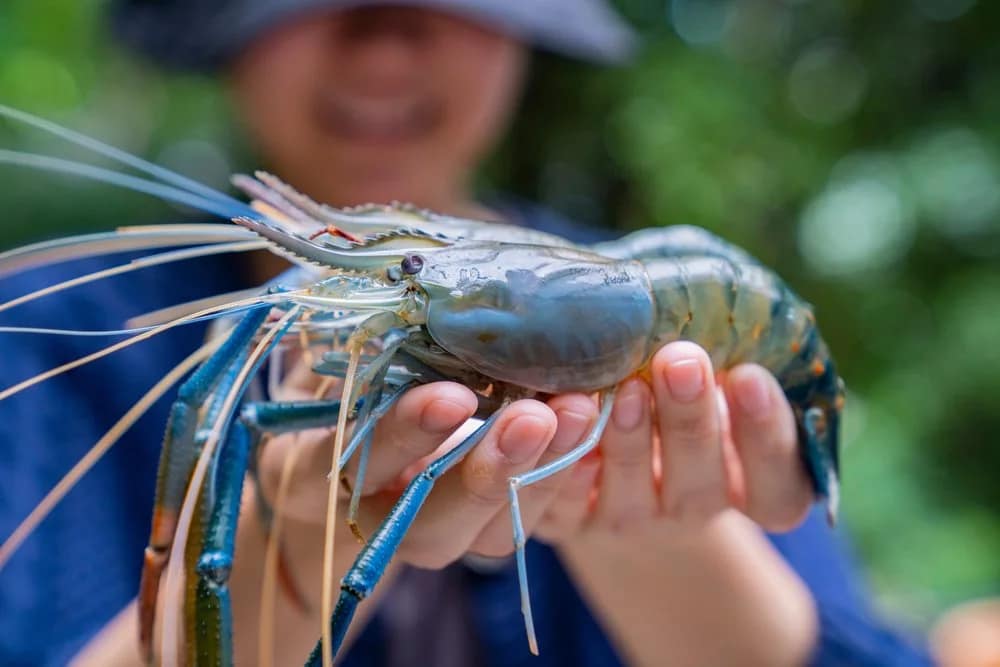
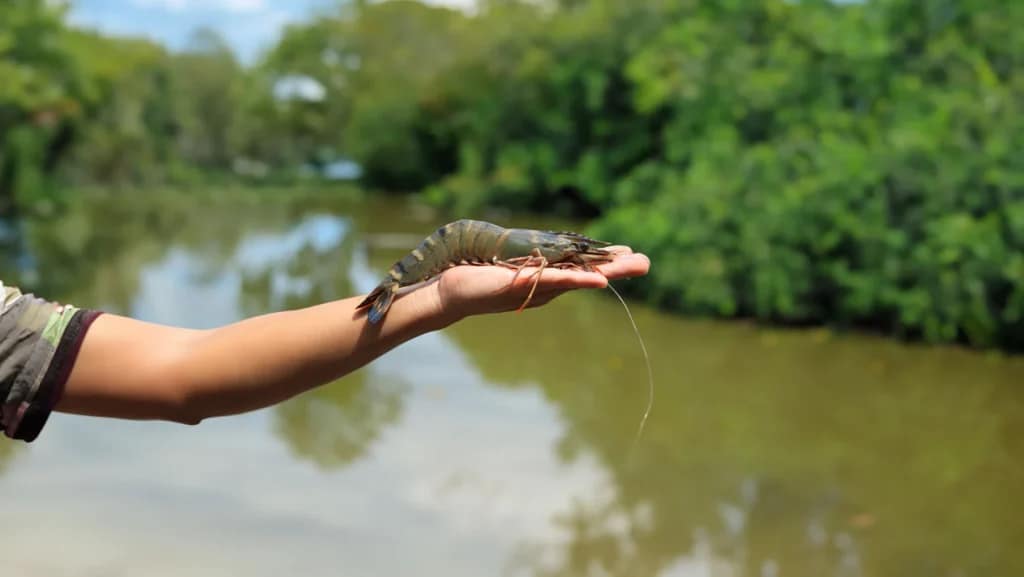
Vietnam is the world’s third-largest shrimp producer, and the industry is a pillar of the economy. In the Mekong Delta, shrimp ponds spread as rice fields were converted and mangrove forests were cleared. Output keeps climbing. Ca Mau province alone reported about 280,000 hectares of shrimp farming, and its production in 2025 came close to 595,000 tons.
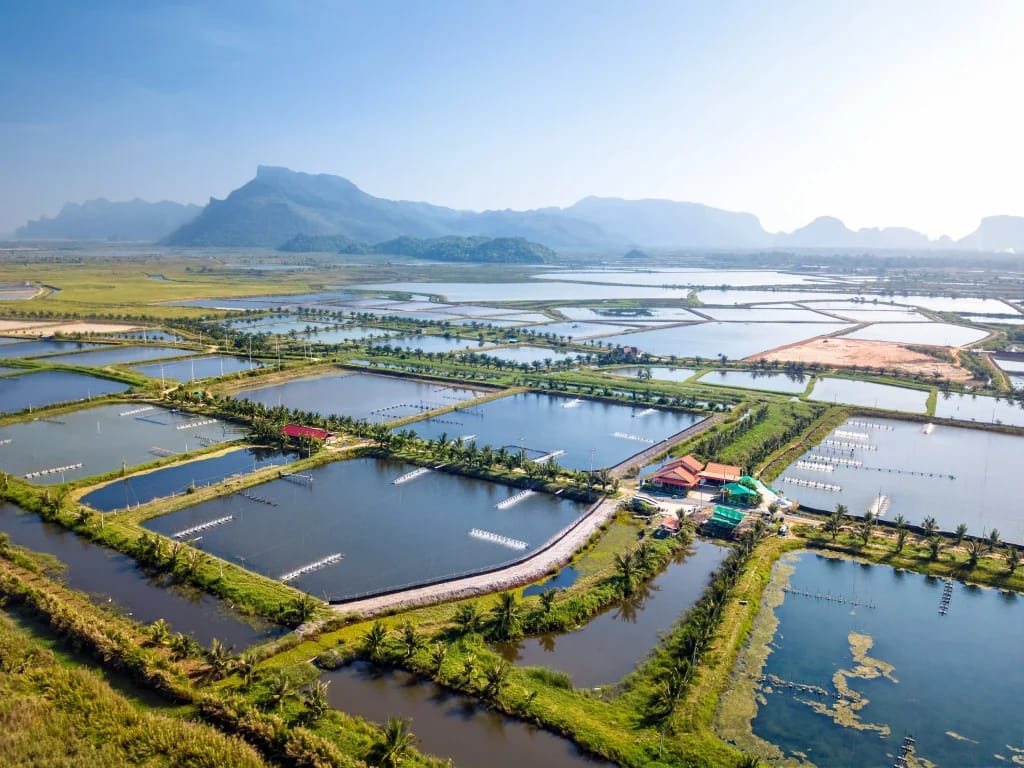
That success has a price, and the delta is paying it.
The environmental bill
Vanishing mangroves. Over three decades Vietnam lost most of its mangroves, primarily because of shrimp farming expansion. In Ca Mau, a satellite and field study found that roughly 30% of mangrove ecosystems had been lost since 1965. Mangroves are not just trees. They shelter young fish and crabs, hold the shoreline together and buffer storms.
Chemicals, feed and fragile ground. Both intensive and improved extensive farming methods require large-scale mangrove clearance, total land renovation and heavy use of artificial feed and chemicals. Reporting on the delta links these methods to deforestation, erosion, land subsidence and rising salinity, which together threaten the stability of the whole region.
A threat to the rice bowl. Salt water intrusion is the cruelest part of the story, because the delta also feeds the country. It produces half of Vietnam’s staple food crops and 70 percent of its rice exports. The farmers feel it personally. One shrimp farmer lost his entire farm to erosion in 2016 after a series of droughts and floods.
The organic turn: shrimp that live in the forest
If clearing mangroves hurts both nature and the farmer’s long-term prospects, the obvious idea is to stop clearing them. That is the logic behind mangrove-shrimp farming, and it has become the clearest “biological” alternative in the country.
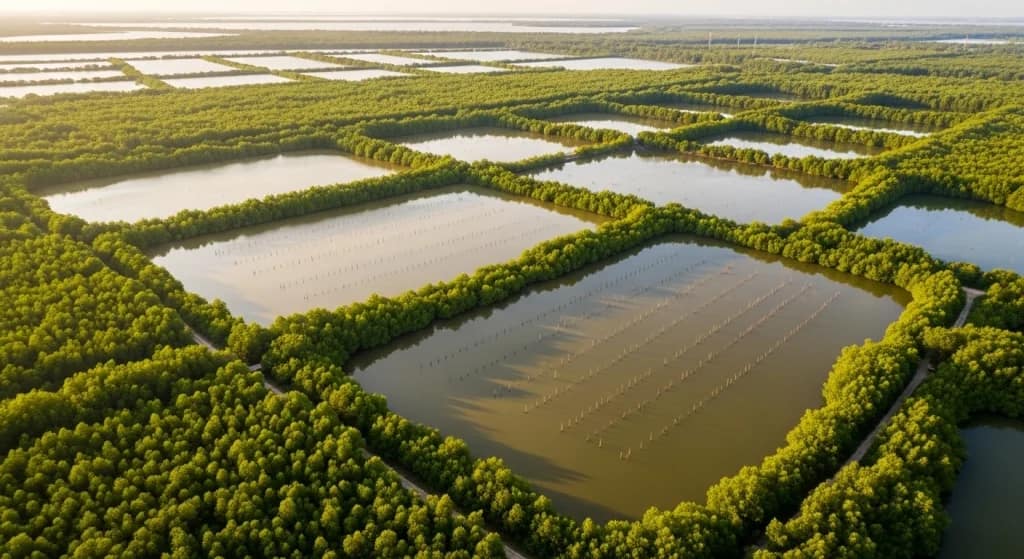
In the integrated model, shrimp and mangrove forests co-exist. The organic version has strict rules. Certification requires at least 50% mangrove cover on each farm, and under the Naturland standard mangrove logging is strictly prohibited and former mangrove areas must be reforested. The shrimp feed partly on natural food from the forest, so farmers do not need chemical treatments.
Money is what makes the model attractive to farmers:
- Early programs offered a premium of about 10 percent for Naturland-certified shrimp, and organic shrimp has been valued 15-20% above ordinary shrimp.
- A pilot payment-for-ecosystem-services scheme required seafood companies to give farmers VND 500,000 per hectare for conserving and restoring mangroves.
- The approach was successful enough to be replicated in Ben Tre and Tra Vinh provinces.
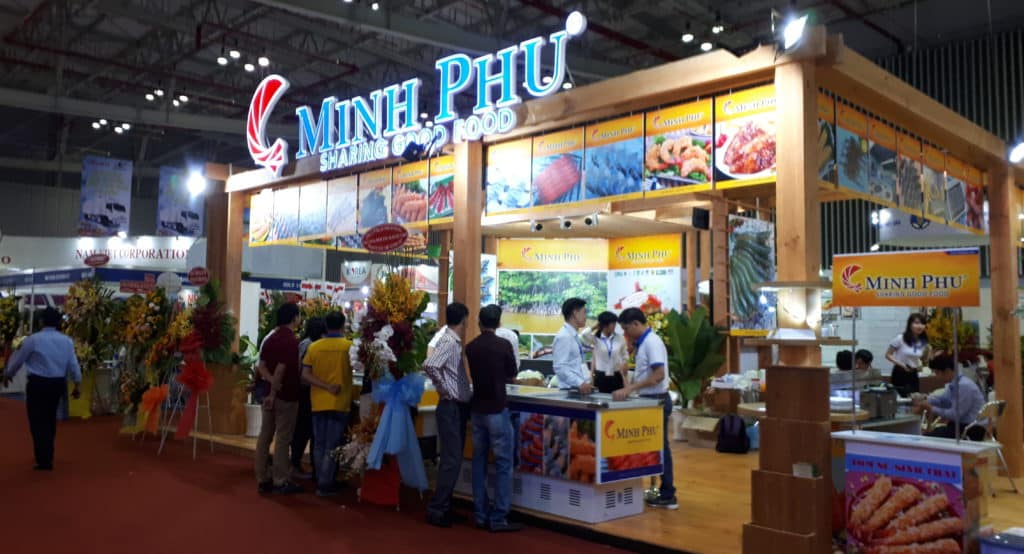
The scale is now significant. Minh Phu Seafood was recognized for the largest organic shrimp area in Vietnam’s mangroves, 9,722 hectares with 2,010 farming households in Ca Mau. By the end of 2024, roughly 22,590 hectares of Ca Mau shrimp farming held international certifications, mainly under shrimp-forest and shrimp-rice models. A group in Tan An Tay received what was described as the first and largest group ASC certification for the shrimp-mangrove model in Vietnam and globally. The province plans to extend certified areas to more districts.
An honest caveat. That is real progress, but 22,590 certified hectares sits beside a shrimp area many times larger. Researchers also treat certification critically. One academic study asks whether organic certification in Ca Mau is a means for improvement or an end in itself. Mangrove yields can also be lower, since mangrove coverage can reduce yield, although the same research finds that more mangrove cover makes yield much less uncertain. For a smallholder, a steadier harvest can matter more than a bigger one.
The other path: high tech
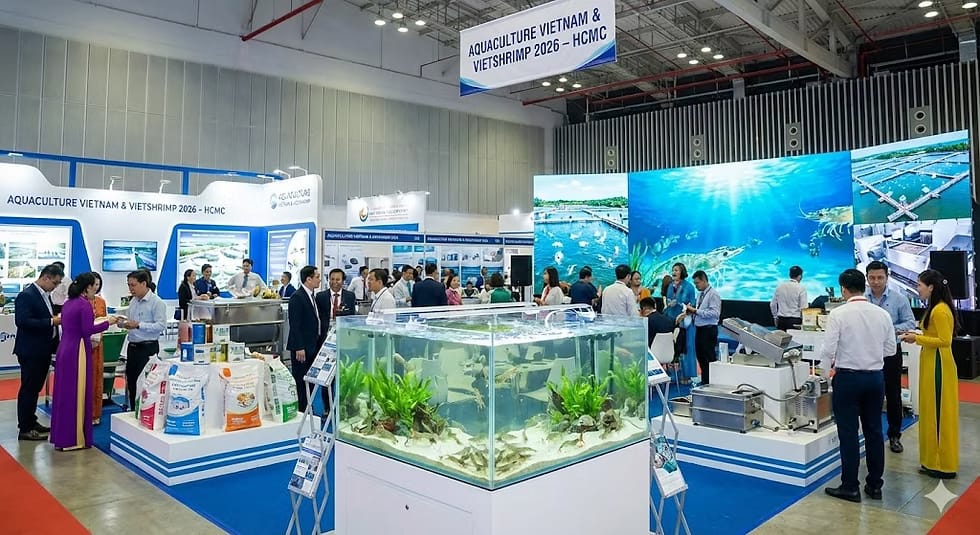
While one camp tries to return shrimp to the forest, another is building the opposite: tightly controlled, technology-heavy ponds. Over the past 5 to 10 years, farming has moved from traditional methods to intensive and super-intensive systems, with lined ponds, environmental sensors, automated feeding and data management.
What this looks like in practice:
- Recirculating systems (RAS). These are closed loops in which 90-95% of water is continuously reused through biological, mechanical and UV or ozone filters. Ca Mau has a plan to expand a super-intensive, low-water-exchange RAS-IMTA model to 1,500 hectares. One Can Tho model uses just 10-20% water supplementation.
- Sensors and IoT. An Giang promotes Biofloc, RAS and IoT-based environmental monitoring, and one farmer there reports using bottom-aeration oxygen systems and automated feeding.
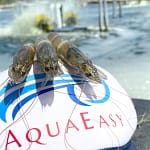
- AI. The Viet-Uc and Bosch AquaEasy partnership applies AI monitoring and automation, with reported yield gains of 20 to 30% and operating costs down by 15%. Minh Phu’s MPBio system uses microbiology and data analytics and claims around 80% survival and up to 50% lower costs.
- Pure oxygen and multi-stage rearing. Systems such as TOMGOXY and multi-stage farms aim to cut costs and reduce environmental impact.
The environmental argument for these systems is that precision means less waste. Feed is the largest cost on a shrimp farm, and the uneaten portion fouls the water. Sensors and automated feeders can reduce it. A Chinese example cited in Vietnamese coverage reported that an AI system reduced feed use by 30% while raising production by 25%, though that is an example from another country.
Is there real robotics?
Mostly not yet, at least not in the sense of autonomous robots wading through ponds. The technology being adopted is largely sensors, automated feeders, aeration control, data platforms and AI analytics. These are automation and “smart farm” tools, not humanoid or mobile robots. Robotics in Vietnamese agriculture is a small but growing market overall, and I did not find solid evidence of widespread robotic shrimp-farm machines. Drones, as in the rice story, are more established elsewhere in the delta.
So which path saves the delta?
The honest answer is that the two paths solve different problems, and they pull in different directions.
| Mangrove-organic | High-tech intensive | |
|---|---|---|
| Main benefit | Keeps mangroves, coastal protection, premium prices | High output per hectare, lower water use, tighter disease control |
| Main risk | Lower yields, limited scale, certification costs | Capital costs, energy use, dependence on technical skill |
| Who it suits | Smallholders in coastal forest zones | Larger firms and well-financed farmers |
High-tech intensive farming can reduce pressure on land. If more shrimp comes from fewer hectares, fewer mangroves need clearing. But intensive ponds bring their own issues, such as energy demand, effluent and the need to finance expensive equipment, and the evidence on their net environmental benefit is still mostly company-reported. Much of the performance data in this article comes from firms, trade bodies and consultancies, so it should be read as promising rather than proven.
The most plausible future is a mix: protected, certified mangrove-shrimp zones where forests can be saved, and well-managed recirculating systems where intensification is going to happen anyway. Whether Vietnam manages that balance will decide if the delta’s pink gold ends up costing it the land beneath.