

The Sky Over the Rice Bowl

How Drones Took Flight in Vietnam’s Mekong Delta
eyesonvietnam
Chapter 1: Empty Fields
The traditional image of rice farming is a bent figure wading through a flooded paddy. Along the lower Mekong, that picture is out of date. Fifty percent of Vietnam’s rice crop is grown in the Mekong delta, and the fields are often empty of people. Overhead, a machine hums along a pre-programmed route.
The delta is Vietnam’s rice bowl. It produces three crops a year, and for generations nearly every task in it was done by hand.
Chapter 2: The Pandemic Opens a Window
The lockdowns of 2020 slowed the world down, and in the delta they did something unexpected. Drone use ramped up in 2020 partly because of COVID-19. Lockdown gave farmers time to research buying a drone or hiring a pilot, prompted by ads on social media. Many young people who had left home because rice work felt tiring and unrewarding returned from the cities to be near family.

Two things came together: idle time to look at new options, and a generation of young people back in their villages who were more comfortable with phones and apps than their parents. The labor problem was already there. As rural populations age, farmers complain that workers are harder to hire, and costs for labor, fertilizer and pesticide were holding back productivity.
Chapter 3: A Local Evangelist
One of the people who saw the opportunity was Lê Quốc Trung, who grew up in a rice-farming family in the Tràm Chim area. He understood how seriously rice diseases threaten crops, and in 2021 he partnered with the Chinese agritech firm XAG to bring AI-equipped agricultural drones to the delta.
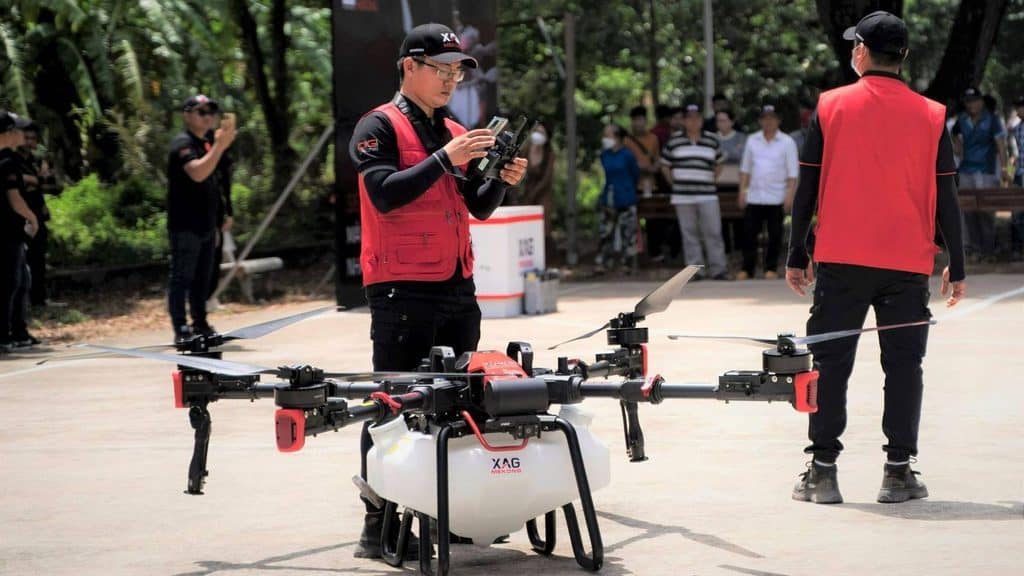
The model was flexible. Farmers could buy a drone and run it themselves, or hire pilots who brought the machine and handled the work. The operation is simple to describe: the operator loads the right amount of seed, pesticide or fertilizer, maps the field with a phone app, and the drone runs automatically, returning when supplies run out.
Convincing farmers took work. Most were used to spraying with large volumes of water and doubted that a drone could protect crops with less. Sellers answered with arithmetic and guarantees. They showed farmers how much waste they could cut, and promised compensation if drones following the recommended water volume failed to work.
Chapter 4: What the Machines Delivered
The results explain why adoption spread so quickly, though many of the figures below come from the manufacturer or its distributors and should be read as such.
- Speed and yield: XAG’s local distributor claimed drones spray rice four times faster than traditional methods while improving yield by 14%.
- Direct seeding: One hectare was sown in two hours, with seed savings of 35% and a harvest of 8 metric tons per hectare, according to XAG.
- Labor: The machines can cut labor needs for some crop tasks by at least half. One farmer had previously hired 20 to 25 workers to spray by hand, which led to uneven coverage and wasted chemicals.
- Environment: Precision matters downstream as well. Less pesticide and fertilizer applied means less ends up in the soil and washes into the river and the sea.
Economics sped things along. Fertilizer and pesticide prices surged after global supply disruptions and the war in Ukraine, pushing farmers to use inputs more efficiently.
Chapter 5: A New Rural Career
Drones created a job that barely existed before: the pilot-for-hire. The work appealed especially to young farmers wanting a decent income. Pilots like To Van Hoang in Đồng Tháp carry their drones by motorcycle, and others reach fields not connected to roads by boat through the delta’s many small waterways.
By 2024, the technology had become routine. Drones were handling pesticide spraying, fertilizing and rice sowing across the region, and farmers reported saving about 20 percent on pesticide and fertilizer. One early adopter found he had spare time and began offering spraying services to other farmers for extra income.
Chapter 6: The Caveats
The transformation has limits. Drones may undercut a traditional way of life and remain financially out of reach for many. Safety is another concern. Supervision of drone use has not been tight enough, according to a local source, and operators must keep drones away from power lines, so farmers hiring them need to provide landing space on their own fields. One farmer interviewed advised his family to stay indoors during spraying.
Final Chapter: Beyond the Paddy, AI and Robotics Across Vietnamese Agriculture
The drones in the rice fields were the first visible step. The same logic of sensors, algorithms and automation is now spreading to other segments, though much of the available data comes from vendors, consultancies and market-research firms, so the numbers are best treated as indicative.
Orchards and coffee. In Binh Thuan, a smart-farming project covers intercropped durian and coffee orchards over 9.9 hectares, cutting spraying time from more than ten days to 2.5 days. Researchers have also built neural-network systems that judge durian ripeness with 94.5% accuracy, which matters for a premium export fruit. In coffee, AI can monitor trees and identify defects.
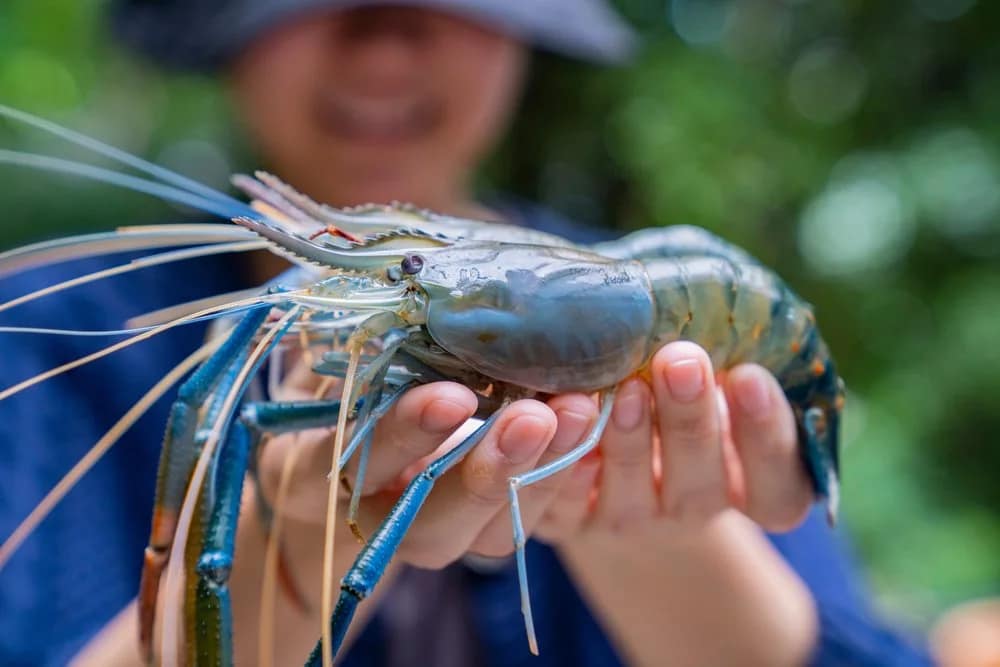
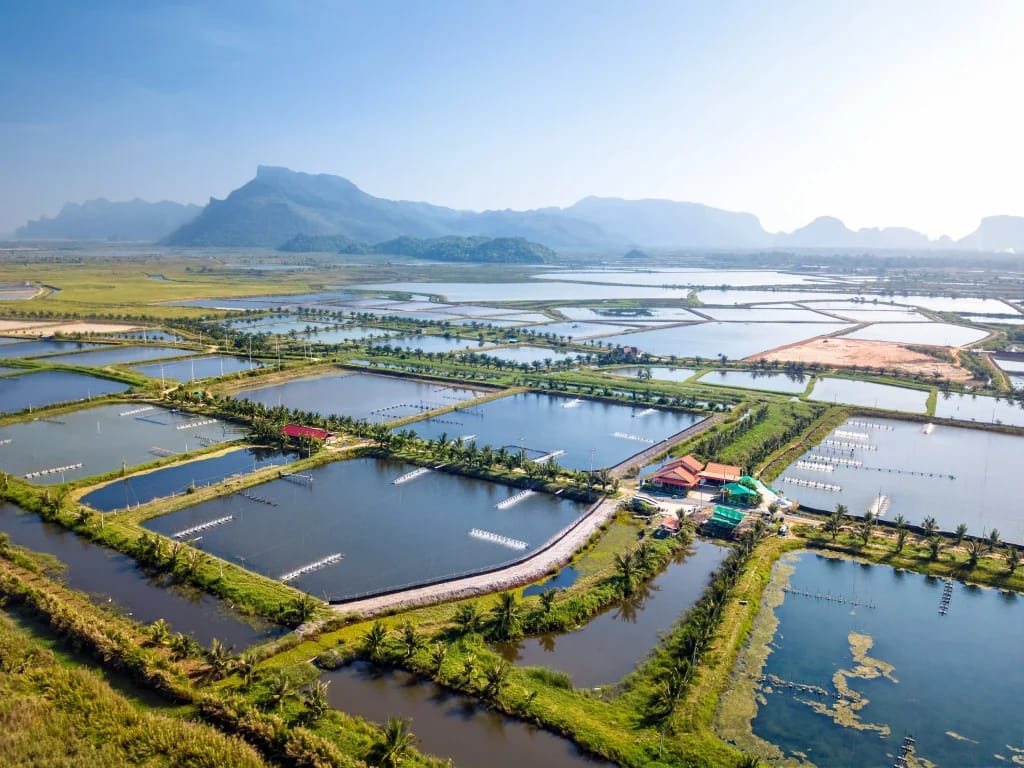
Aquaculture. Shrimp farming is a major frontier. A Viet-Uc and Bosch partnership with AquaEasy applies AI-powered real-time monitoring and automated systems, reporting 20–30% higher yields and 15% lower operating costs. Integrated rice-shrimp models in Ca Mau, Tra Vinh and Ben Tre are also being promoted as climate-resilient, with one company reporting doubled shrimp productivity and tripled farmer incomes.
Robotics and the market. One research firm values Vietnam’s agricultural robot market at USD 189.76 million in 2025, rising to USD 245.81 million in 2026. It points to labor migration to cities as a driver and to high-value crops like dragon fruit, mango and durian as growth areas. The same report notes that limited farmer awareness and technical expertise still constrain widespread adoption. Drones are growing fast too, with one analysis projecting a market of USD 147.5 million at a 26.23% annual growth rate.
Policy. The state is pushing in the same direction. A recent Japanese-language briefing notes that the government is turning its goals into crop-specific programs, including a new program using IoT, sensors, drones and AI for high-quality rice.
The Mekong’s farmers did not set out to join a technological revolution. A pandemic gave them time, a labor shortage gave them a reason, and a few local entrepreneurs gave them the tools. The open questions now are who gets access, who gets left behind, and how quickly the rest of Vietnamese agriculture follows the sky over the rice bowl.