

Listening to the Pond

What the Viet-Uc and AquaEasy Deal Means for Vietnam’s Shrimp Boom
eyesonvietnam
First, a correction
In my earlier shrimp article I described this as a “Viet-Uc and Bosch” partnership. That was imprecise. The commercial partner is AquaEasy, which is a spin-out from Bosch’s innovation hub, grow, so Bosch is its origin and not a direct party to the deal. AquaEasy was established in 2017 as an AI aquaculture technology company.
The deal in brief
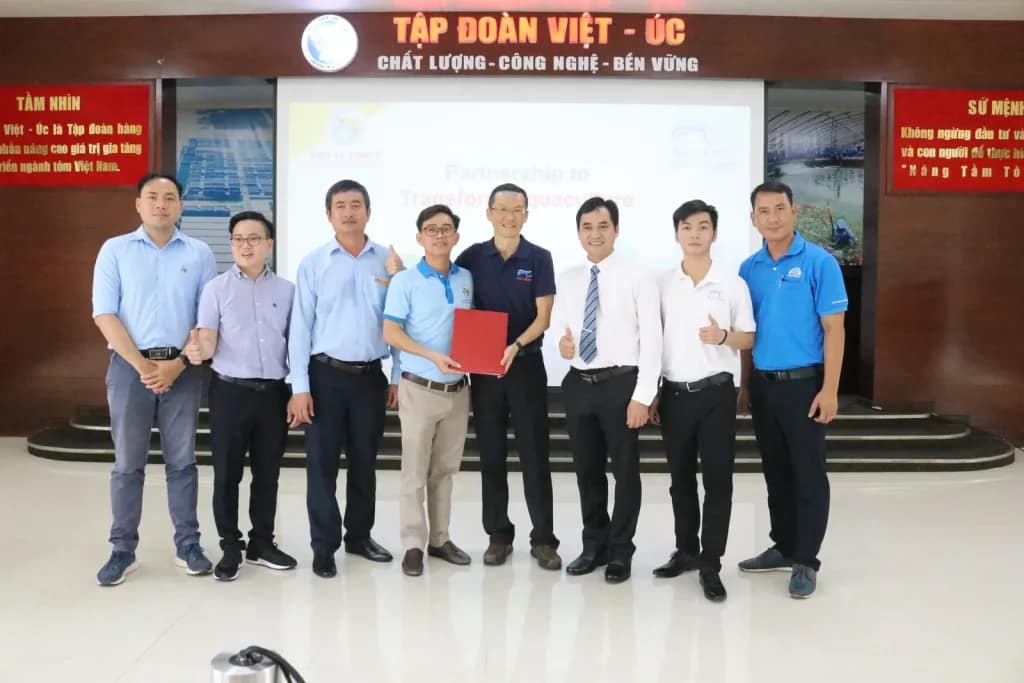
In mid-2022, Viet-Uc Group, one of Vietnam’s leading shrimp producers, announced an official commercial partnership with AquaEasy. Under it, Viet-Uc would deploy AquaEasy’s AI systems, i-feeders and ShrimpTalk in over 1,000 shrimp ponds. Sources disagree on the scale: one trade outlet reported 5,000 ponds across Viet-Uc’s own farms and its customers’ farms, so the 1,000-pond figure is best read as the confirmed starting point.
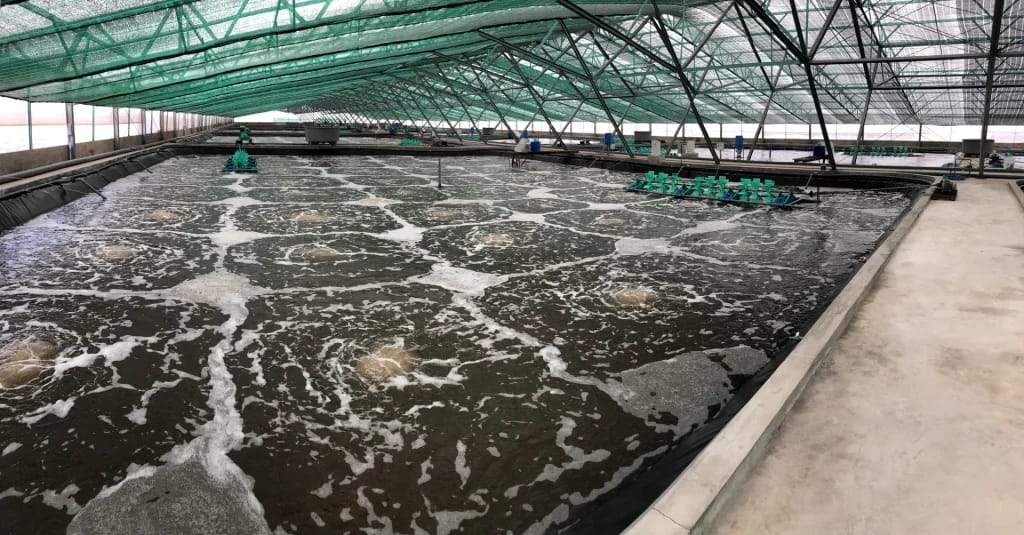
Both sides framed it as a showcase. They wanted it to be a role model for shrimp farmers applying smart solutions to improve productivity, profitability and sustainability. AquaEasy then signed a similar agreement with feed company Grobest, which suggests the Viet-Uc deal was the opening move in a broader push into the Mekong Delta.
What the technology actually does
The system has three parts, and the clever one is acoustic.
Sensors and software. AquaEasy describes a holistic package of sensors, software and services to monitor water quality and manage the pond. It is an AIoT system, meaning AI combined with internet-connected devices, and it is already commercially deployed in the Mekong Delta.
The i-feeder. This is a smart feeder that gives feeding suggestions from AI decision algorithms, using sensor data stored in the cloud. It is designed to observe hunger levels, set feeding times and provide an optimized amount of feed.
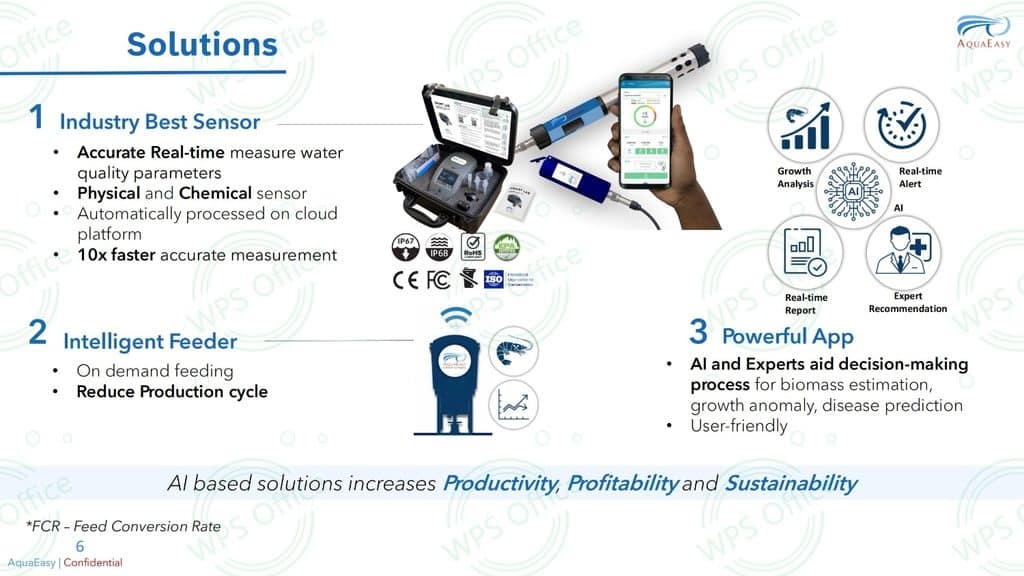
ShrimpTalk. The company’s pitch is that it lets shrimp talk to farmers, signalling when they are hungry or stressed. This is passive acoustic monitoring. In an AquaEasy conference paper, the problem is stated plainly: turbid pond water makes it nearly impossible to see more than a few centimeters, so farmers cannot watch the animals eat the way a cattle farmer can. The solution is to listen. The clicking sound shrimp make when eating is a clear indicator of appetite, and AI combines it with water quality, shrimp behavior and environmental conditions to adjust feeding.
Why feed is the whole game
Feed is the largest cost on a shrimp farm, and mistakes cost twice. In AquaEasy’s words, too little feed stunts growth, while too much raises costs, fouls the water and triggers disease. A third consequence follows from this. Uneaten feed is the biggest source of pollution from intensive ponds, so improving feed efficiency is both an economic and an environmental lever.
The wider research supports the general approach. Academic work on passive acoustic feeders concluded that they are currently the most effective feed management tool in shrimp pond production. Commercial trials of a competing acoustic system, AQ1, reported growth gains of roughly 12-15% and feed-conversion improvements of 12-13%, with labor savings and feed conversion together cutting farm-gate costs by more than 10 percent.
What the results claims look like, and how far to trust them
Here is where I’d urge caution.
- AquaEasy has said its technology increases farmers’ productivity by 30 per cent, and a company paper claims feeding efficiency improvements of up to 30%.
- The figures in my earlier article (20-30% higher yield and 15% lower costs) came from a consultancy summary. I could not trace the 15% cost number to a primary source, so treat it as unverified.
- “Up to 30%” is a ceiling, not an average. Results from a vendor, a partner and a trade-press release all share an interest in a good story. I found no independent, published evaluation of the Viet-Uc deployment specifically.
The credible reading is that acoustic feeding is a real, well-studied technology with sound results elsewhere, and that gains of 10-15% on feed conversion are plausible, while 30% is the best case.
What it means for the boom
1. Intensification gets safer. Vietnam’s shrimp sector has been moving from traditional to intensive and super-intensive systems, with lined ponds, sensors and automated feeding. Higher stocking densities raise the cost of every feeding mistake. Technology like this makes intensification less of a gamble.
2. A path for a fragmented industry. The industry is dominated by thousands of small family-run farms. That is why the partnership model matters: a large integrator like Viet-Uc can roll out technology across its own ponds and its customers’ ponds, giving smaller farmers access they could not afford alone. Vietnamese officials have also described a value chain in which linkage and cooperation between actors is fragmented and ineffective, hurting quality, traceability and competitiveness. Data-driven farms are a step towards traceability.
3. Labor and skills. AquaEasy says its aim is to reduce manual labour and eliminate subjective assessments. That echoes the drone story in the rice fields, where technology replaced guesswork and hard physical work, and where a new class of technically skilled young workers emerged. Trained people to maintain systems remain a requirement, as the research on automated feeders also notes.
4. The environmental promise, with limits. Less wasted feed means cleaner pond water and less effluent, which is the real sustainability case. But this is intensive farming made more efficient, not a return to the mangrove-friendly models discussed earlier. It reduces the footprint per ton, not necessarily the total footprint if production keeps expanding. Whether efficiency gains lead to less pressure on land or simply to more shrimp is the open question.
The bottom line
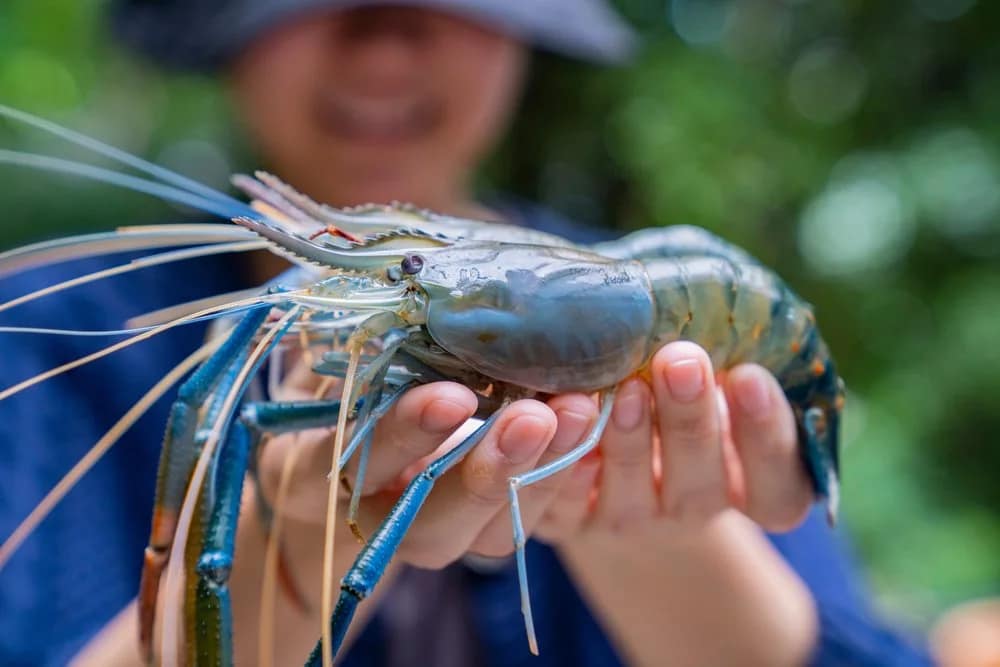
The Viet-Uc and AquaEasy partnership is a good example of what “high-tech shrimp farming” means in practice in Vietnam today: not robots wading through ponds, but sensors, microphones and algorithms deciding when and how much to feed. It is a bet that the biggest inefficiency in the industry, guessing at appetite in murky water, can be solved by listening. The bet looks sound, and the scale of the rollout matters. The proof, though, still needs independent data.