

The Golden Star Warriors’ Long Road to 2030

eyesonvietnam
Vietnam has never played at a men’s World Cup. A Korean coach, a generation of young players and a football-mad nation of 100 million are trying to change that.
An old dream with new credibility
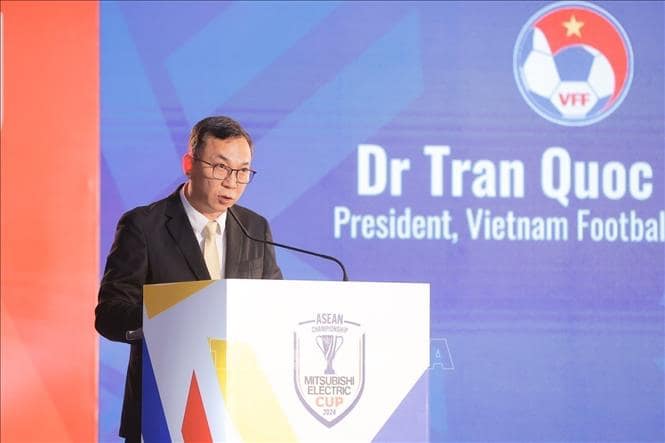
Vietnam’s World Cup goal is not a recent slogan. The Vietnam Football Federation set a target several years ago of qualifying for the 2030 World Cup, alongside a top-10 ranking in Asia. The federation’s president, Tran Quoc Tuan, has repeated it since. He has called the senior team ready for both the near-term goal of the 2026 AFF Cup and the long-term goal of 2030, and described the U23 side as the generation being built for the World Cup.
The timing helps. FIFA’s expansion to 48 teams from 2026 has widened the door for Asian sides, and the federation has openly framed the bigger field as an opportunity. Vietnam has already come close in recent cycles. In the 2022 qualifiers it reached the final round of Asian qualifying for the first time. It did not qualify, but it beat China and drew with Japan along the way.
There is also precedent in the women’s game. Vietnam’s women reached the 2023 Women’s World Cup, the first time any Vietnamese national football team had reached a World Cup. They finished last in their group, but they showed that the country can get there. This year the U17 side also qualified for the 2026 FIFA U-17 World Cup for the first time.
The coach: Kim Sang-sik
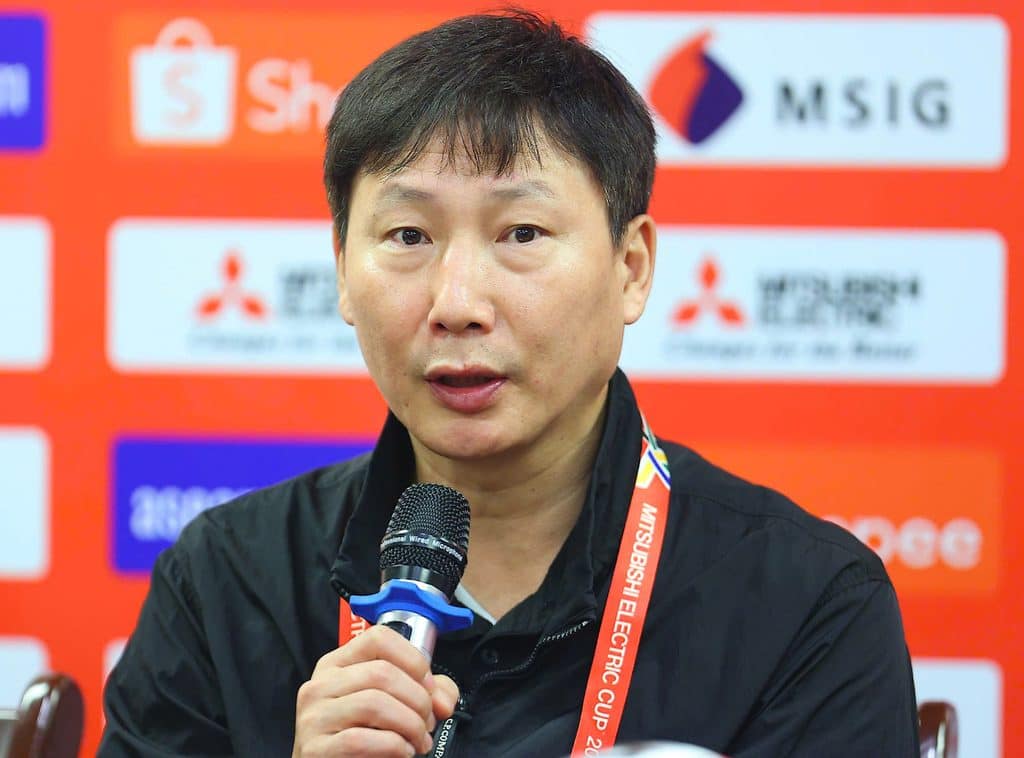
The man leading the project is Kim Sang-sik, a South Korean who succeeded the Park Hang-seo era’s successors and has since built his own record. He became the first coach to win the AFF Cup and the U23 Southeast Asian Championship in the same year, which even Park did not manage. After a second straight ASEAN Cup title this year, he said his ultimate aim is to take Vietnam to its first World Cup, and that FIFA president Gianni Infantino told him he wanted to see Vietnam there.
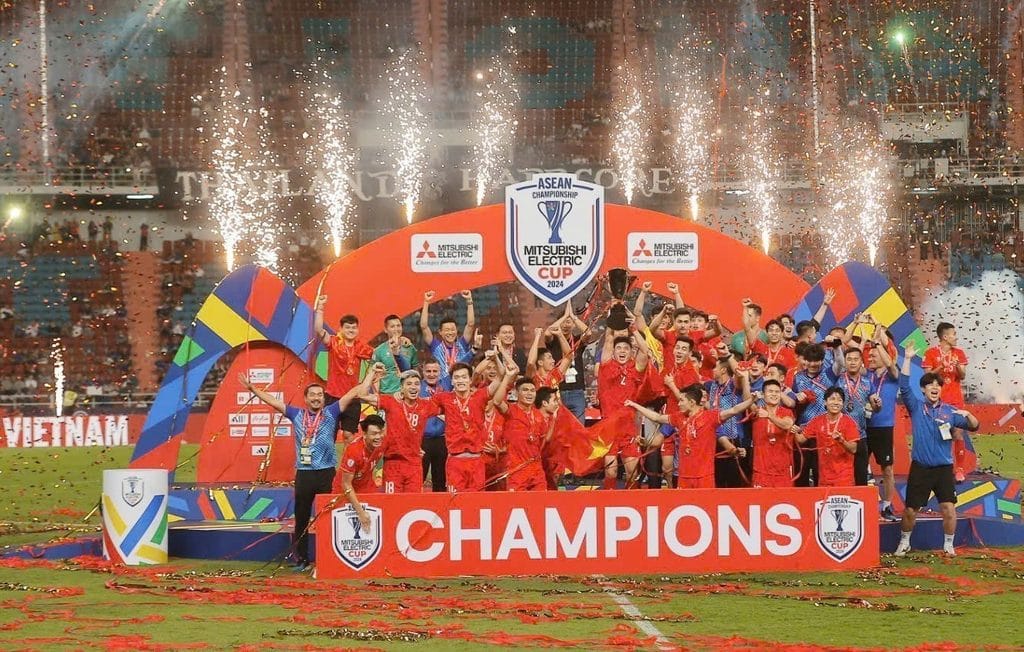
Kim insists the regional trophies are stepping stones. In his words, if the team gives everything, it can win a ticket to 2030. He also describes the job in human terms. With the senior team he concentrates on players’ motivation and dedication.
The strategy
1. Use the calendar as a ladder. The road is staged. After the 2026 AFF Cup comes the Asian Cup in January 2027, then the 2030 World Cup qualifiers beginning in September 2027. The Asian Cup will be the real test: Vietnam has been drawn in Group E alongside South Korea. Kim’s home country will be a measuring stick for how far his team has come.
2. Blend veterans with youth. The 2024 ASEAN Cup winners are aging. Analysts note that the squad can still compete at a high level for a few more years, which makes balancing experience and youth the central challenge. Kim has used friendly camps to bring in young players and let them grow before the qualifiers begin.
3. Treat the U23s as the 2030 core. Players now in the U23 team will be in their mid-20s when 2030 arrives, which is the right age for a World Cup. Kim leads both teams, and this continuity lets him shape one playing identity from the age groups up to the senior side.
4. Build a culture, not just a lineup. Kim’s focus on effort, unity and mentality is a deliberate response to what Vietnam lacks in physical size and depth: collective discipline and fast, organized football.
The obstacles
An honest look has to include the problems. Analysts argue that reaching the World Cup will require systemic change, not just a good coach. The main gaps are domestic league quality, youth academies, sports science and the physical gap with Asia’s top teams such as Japan, Korea, Iran and Saudi Arabia. Vietnam has dominated Southeast Asia, but the continental level is a different league. A good run in 2027 would show whether the project is real.
Chapter: Football and the soul of Vietnam
In Vietnam, football is more than a sport. It is one of the few things that can bring the whole country into the street at once.
The defining moment came in January 2018, when the U23 team reached the Asian Championship final in China. Matches were played in freezing, snowy conditions, and millions of people poured out on motorbikes waving the red flag with the yellow star. Many Vietnamese still point to those nights as a moment when a young, optimistic, outward-looking country saw itself on the Asian stage. A coach from abroad, Park Hang-seo, became a national figure, and the lesson stuck: foreign expertise, hard work and belief can compete.
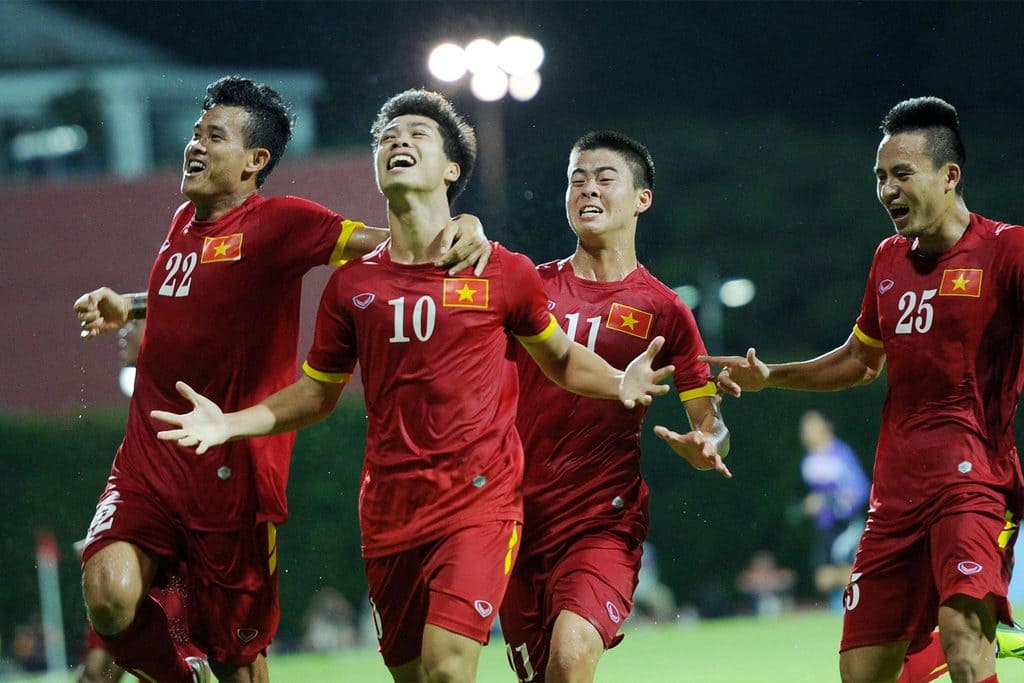
Football also works as a shared language across a country with strong regional identities. North and south, city and village, old and young cheer for the same team, and national matches are treated as family events. Corporate sponsors, local governments and ordinary fans reward success with bonuses, parties and public celebration, a sign of how much emotional capital the national team carries.
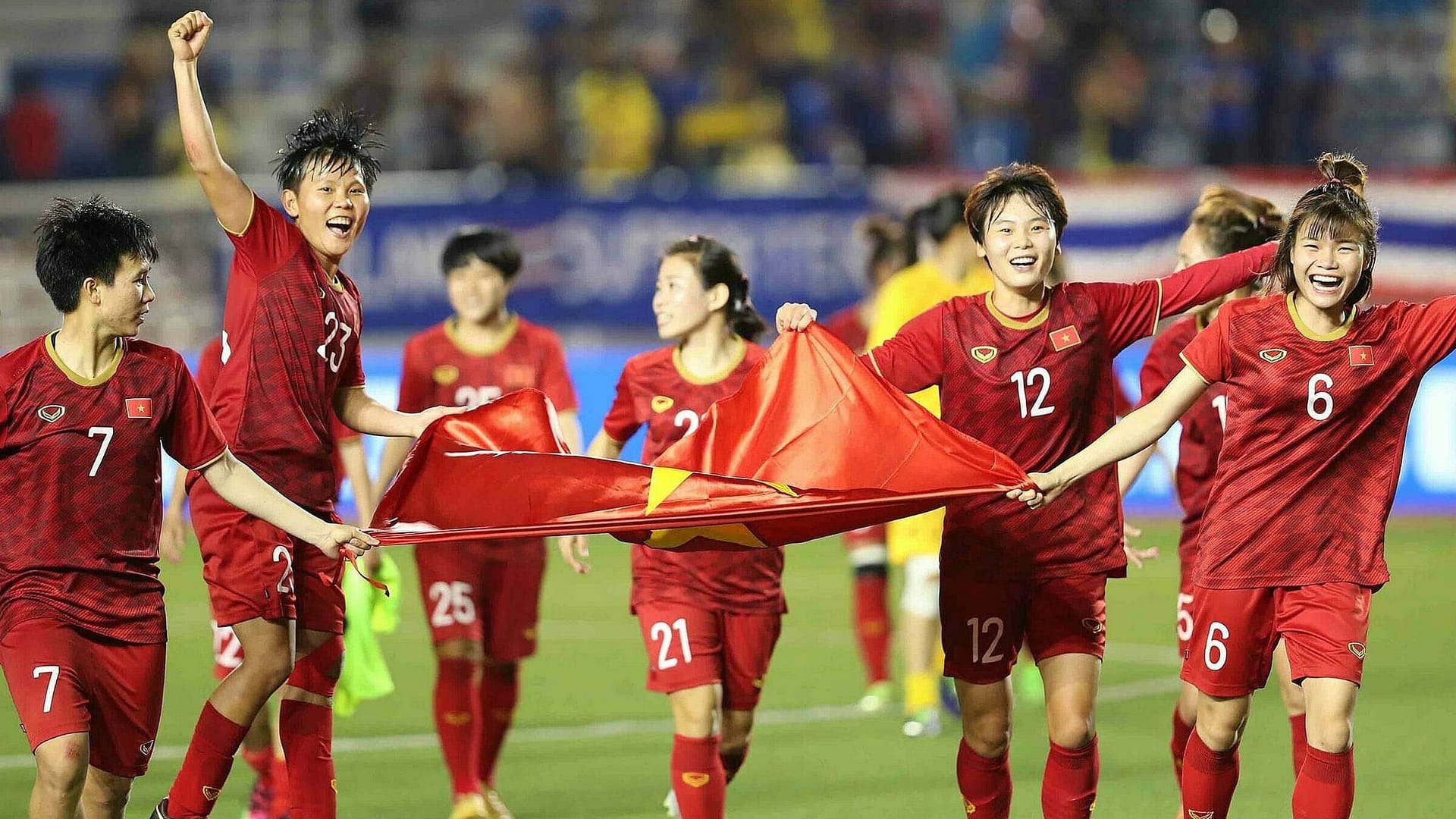
The social role is also changing. The women’s team is a good example. Reforms since the late 2010s have pushed women’s football into schools, universities and companies, though cultural attitudes and the lack of a professional domestic league remain obstacles. Its World Cup debut made women’s football more visible, and the success of the U17 team suggests that investment in youth pays off.
For millions of young Vietnamese, the national team is also proof that talent from small towns can reach the top. That is why the World Cup goal matters beyond the pitch. It is a symbol of how far the country has come and how far it believes it can go.
Vietnam is not a favorite, and qualification will be hard. But with a clear plan, a motivated coach, a developing young core and a nation behind it, the dream is more credible than it has ever been. The first real answers come in January 2027.